Part II: Lebanon, Mother of Saints
- mckennafoley25
- Aug 24, 2022
- 5 min read
I'd like to start off with an apology! As soon as I made a "part one" post I knew I was doomed to procrastinating part two, and here we are. I wanted to write about my experience after the Qadisha in Lebanon, and this period of time is so packed with beautiful experiences and people that it's tough knowing where to begin.
Our time after the Qadisha valley was mostly spent on a bus, driving to various holy sites and natural wonders of Lebanon. By some miracle, our bus was only involved in one minor accident despite taking up three-quarters of most narrow country roads (remember the hairpin turns I mentioned a couple posts ago?). This part of the pilgrimage had a different type of intensity, with days filled with activities and people and teachings. Our crash course on Lebanon had begun. The community members told us about the history of Lebanon, their personal histories, the religious conflicts and victories, and the struggles of the past few years. When you hear them speak, you can see the stubborn hope that they refuse to give up on for their country.
As I discovered during my time there, Lebanon was and is the home of saints. From our time spent in the Holy Valley, to visiting shrines and small simple homes, there was evidence of the holy people that lived there. There were recognized and beloved saints, like Charbel and Rafqa, and lesser known ones. I got to visit the childhood home of a simple monk (now up for canonization) in a small village where most people claim to be related to him. I had a silent, monastic lunch with bearded Maronite monks in work coveralls.

One of our first stops directly after our hike was to a cedar forest. While there are only a few protected Cedar forests left in Lebanon, the one we visited was the oldest. The tree I am standing next to in the photo was estimated to be thousands of years old, and is the largest tree in the forest. Just a few meters down the hill, the cedar that inspired the Lebanese flag grew in a small valley apart from the rest of the forest.
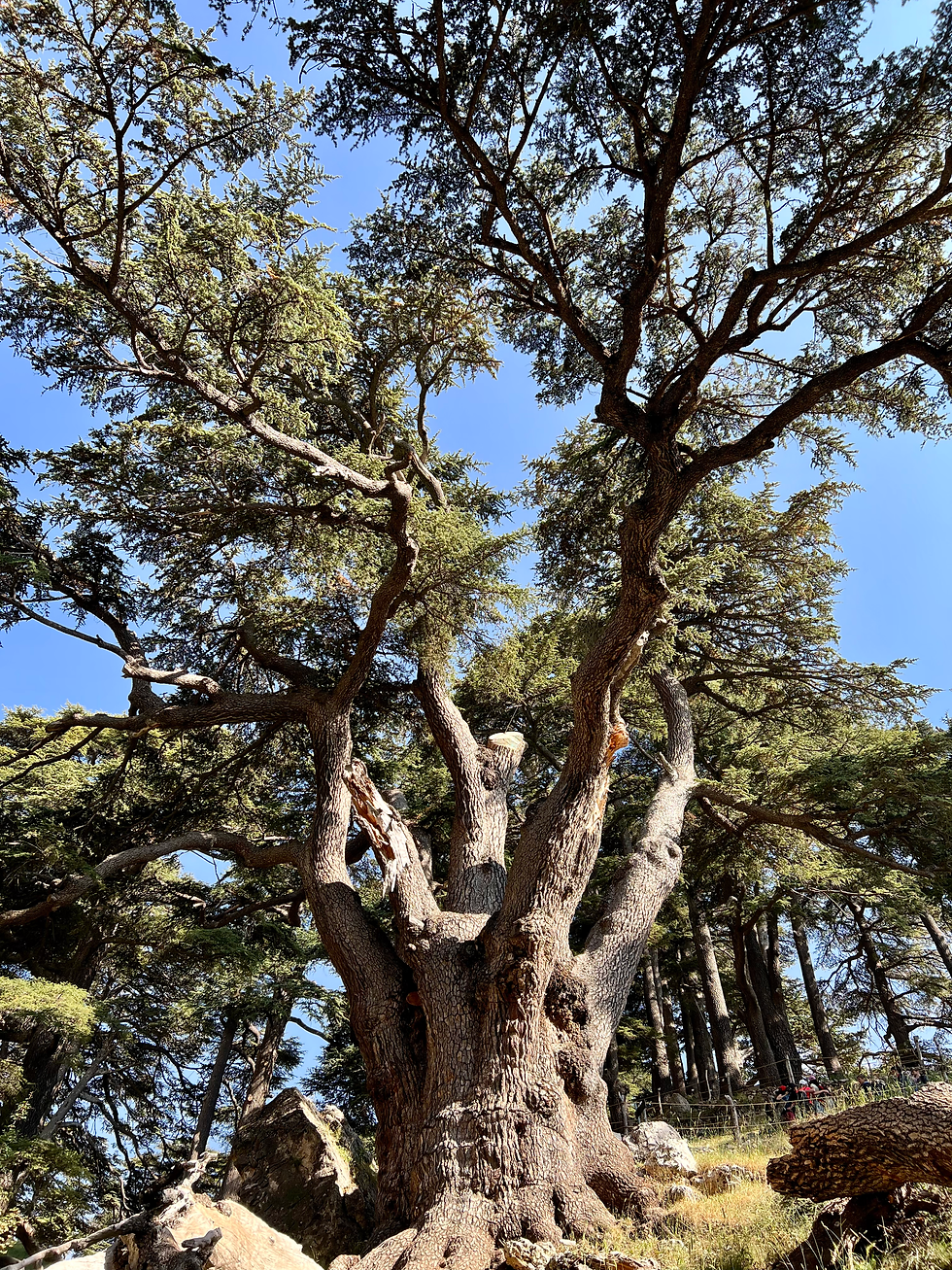
Here's the same tree from another angle. Part of the reason why the cedars last so long is their slow growth rate, only getting taller at the rate of 1 centimeter per year. Trees do not begin to reproduce until 20.
It's not difficult to understand the awe that biblical writers had for these trees. When we walked through the forest, it felt wrong to speak loudly. We didn't talk to each other much, but instead looked up at the trees above us. We were able to break off into small groups and reflect on the Bible passages that describe the cedars. Seeing the strength and presence of these trees made it easy to understand why the Lebanese wanted to emulate them; no matter what, Lebanese cedars remain upright.
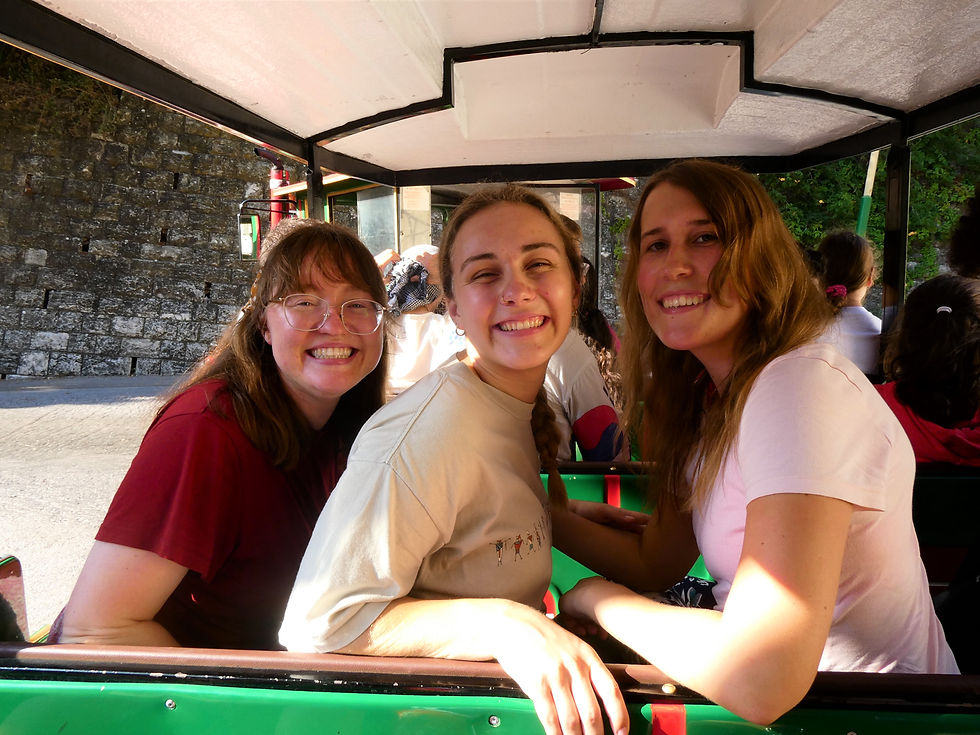
This was one of the most joyful photos we took! We visited the Jeita Grottos, huge caves hidden in the side of the mountain. (No pictures allowed :( we even had to put our phones in lockers before entering) Even though the caves were absolutely breathtaking, one of the best moments of the day was riding back down the hill on a tram because it was 90 degrees and humid.

"...we sailed to Syria and put in at Tyre, since the ship was to unload her cargo there. We sought out the disciples and stayed there a week....when our time was up we set off. Together with the women and children they all escorted us on our way till we were out of the town. When we reached the beach, we knelt down and prayed; then, after saying goodbye to each other, we went aboard and they returned home." Acts 21:3-6
Another powerful experience we had in Lebanon was our day trip to the biblical cities of Tyre and Sidon, places where Jesus and the apostles visited, along with Old Testament figures like Elijah. It was a strange experience to take a two hour bus ride within a tiny country and feel totally disoriented when you stepped off the bus. The south of Lebanon is mostly populated by Lebanese Muslims and many refugees from both Palestine and Syria. While we toured the cities, the midday Adhan echoed from multiple mosques at a time, something that I had not heard in the northern areas of Lebanon.

Nothing like lounging on some 1,000-year old bleachers after a long day, right? Tyre was one of the most successful port cities in the Roman world, and their city had the largest known circus outside of the city of Rome itself. In its prime, it could hold about 100,000 people, the same capacity as a D1 football stadium. The damage on some of the stones show evidence of chariot crashes, a major risk in one of the most popular sports in the Roman world.

Another site of Roman ruins in Tyre. Unlike Rome, these ruins were totally unrestricted. We walked down the central road pictured on the right, literally walking in the footsteps of the apostles towards the beach.

We also visited an artist's community that was on the outskirts of Tyre. The art, specifically pottery and glassblowing, in the area has been famous for thousands of years. Les ateliers de Tyr keeps this tradition alive through employing artists in residence and giving classes. Obviously, the pottery was my favorite :-)

Byblos, the nearby town, had a beautiful open-air market that sold a wide variety of things. The selection was included but not limited to: spices, Nike shoes, soap, fabric, and fish fossils. Needless to say, we were raring to go shopping for souvenirs!
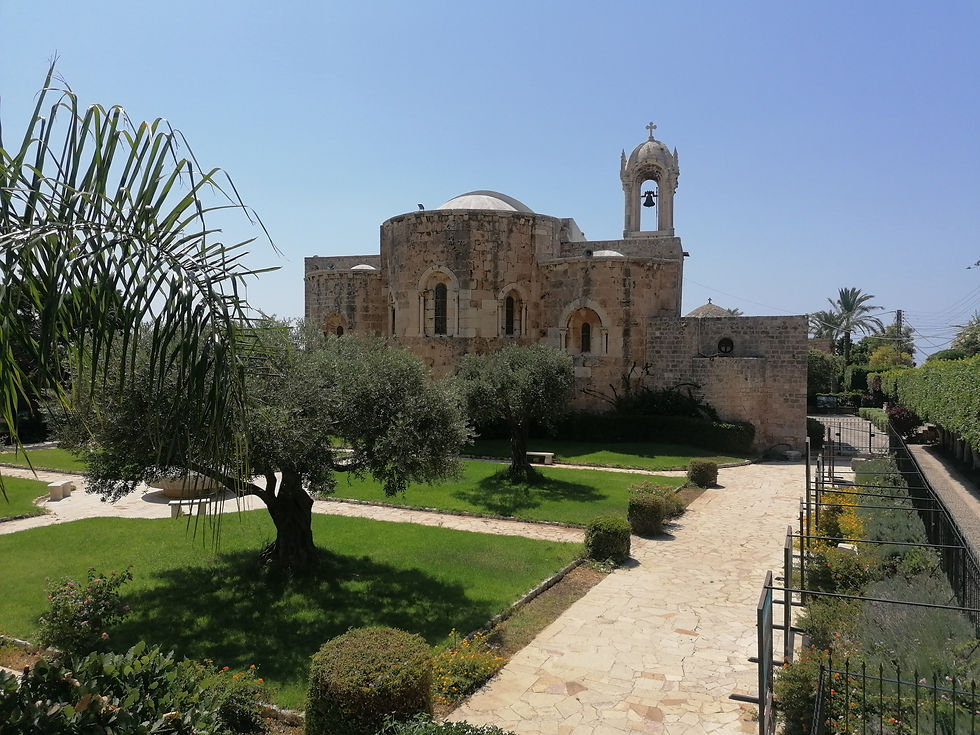
This church, just beyond the market, is a remnant of the Crusader occupation of the 1100s. I was continually taken aback by the amount of places that have such an incredible history. Of course, there was a pretty high concentration of these places considering Byblos is one of the oldest continually occupied cities in the world.

Another favorite moment of the trip was when we gathered with other young adults from Lebanon to pray and sing together. Their worship was unapologetic, vibrant, and really fun!
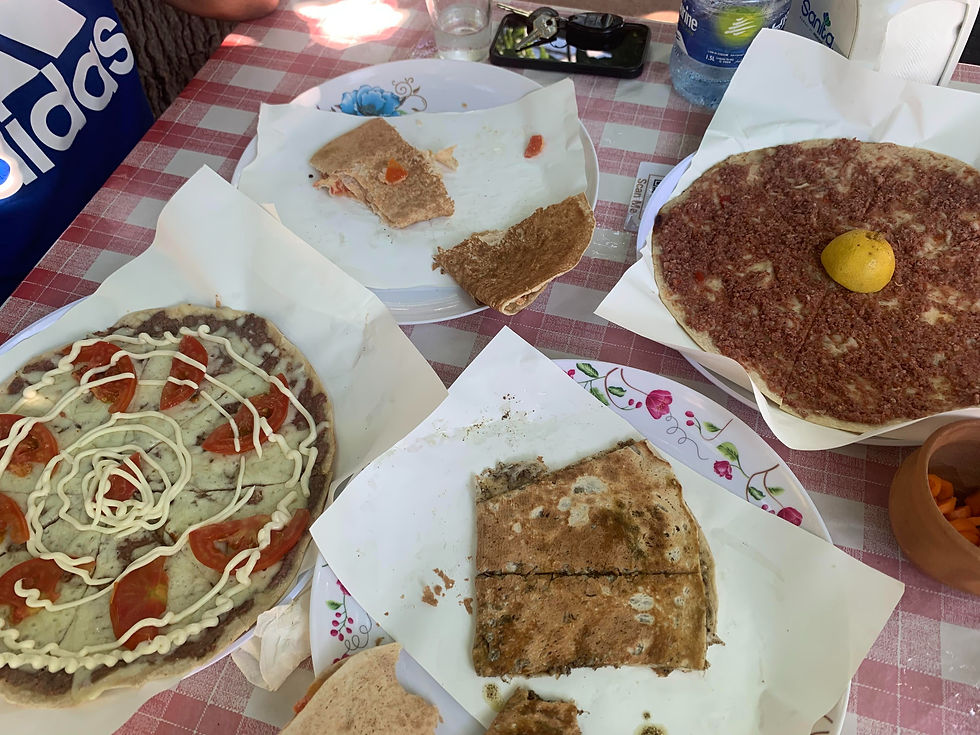
Pictured above are some varieties of Lahm, a traditional Lebanese comfort food. The one on the far right is Lahm bi Ajeen, made with meat. I lovingly referred to all of them as either "Lebanese Pizza" or "Lebanese Quesadilla" because I couldn't remember the Arabic names.
Once the larger group left, I had the opportunity to live in the community house for an additional week on my own. I feel really blessed to have had that chance, because I felt like I knew the community members, and even Lebanon, on a deeper level. I had the chance to sit and soak in the views in silence, and to travel to areas that we didn't have time to visit on the group pilgrimage.

This was in the mountains near Tannourine, near where we hiked the Qadisha. From this mountaintop, you could see Tripoli, the major city in northern Lebanon, both of the mountain ranges that run the length of the country, and the Mediterranean Sea.

Though I didn't have time to catch a photo with the Melkite monks we shared lunch with, I did get some amazing prayer time in their beautiful chapel. This space was constructed in the traditional Melkite style, using logs to create a distinction between the sanctuary and the congregation. The icon on the back wall depicts Mary, Jesus, and the angels hovering over a depiction of the mountains in the area, complete with tiny farms and a small painting of their monastery.


Comments